


Table Of Content
- Introduction: A War That Refuses to Stand Still
- Why Experts Believe Momentum Is Shifting
- Ukraine’s Drone Revolution
- The Resilience of Ukrainian Society
- How Europe Is Reducing Ukraine’s Dependence on the US
- Russia’s Economic and Political Challenges
- The Air Defense Problem Ukraine Still Cannot Ignore
- Why Peace Negotiations Remain Difficult
- What Could Happen Next
- Key Takeaways
- Conclusion
Expert analysis from a recent Kyiv visit suggests Ukraine is gaining ground but one critical shortage could still tip the balance.
Introduction: A War That Refuses to Stand Still
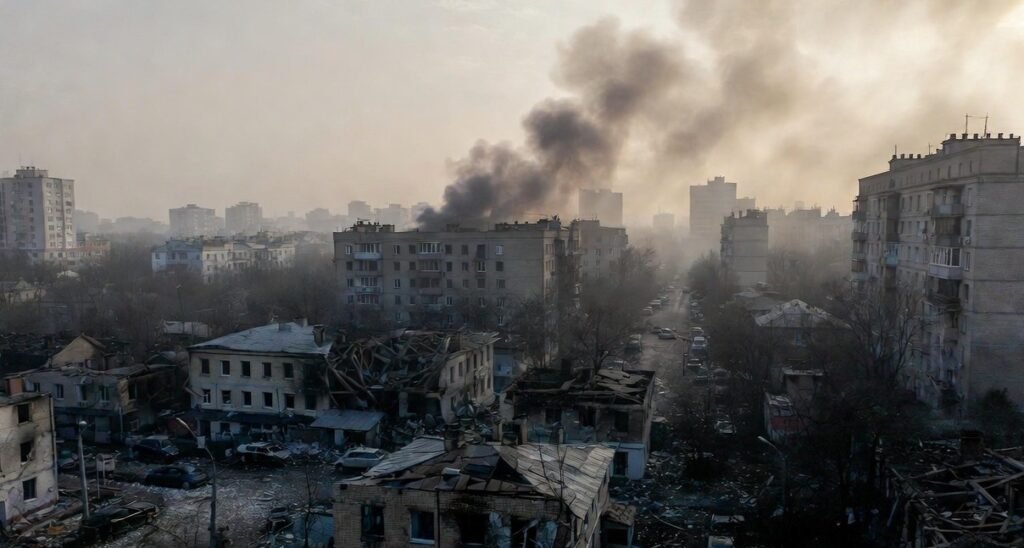
Anyone following the Ukraine war latest news in mid-2026 could be forgiven for feeling confused. On any given morning, headlines swing between reports of Russian missile barrages on Kyiv and images of Ukrainian drones setting oil refineries ablaze deep inside Russian territory. The story is simultaneously grim and, for Ukraine’s supporters, cautiously hopeful.
Two senior analysts, Max Bergmann and Maria Snegovaya, recently returned from Kyiv with a nuanced assessment of where things stand. Their findings, shared with policy circles in Washington, paint a picture that defies easy summary. Ukraine is not winning in any clean, decisive sense. But it is performing far better than many outside observers expected, and the strategic picture is shifting in ways that matter.
This article draws on their analysis, on current reporting from the front, and on the broader Russia-Ukraine war analysis available in mid-2026 to explain what is actually happening: why Ukraine’s drone campaign has become a strategic weapon, how Europe is filling gaps left by an inconsistent US posture, what the economic pressure on Russia actually means, and why the most dangerous shortage for Ukraine right now has nothing to do with troops or territory.
Why Experts Believe Momentum Is Shifting
For most of 2023 and 2024, the narrative around Ukraine was one of stalemate and attrition. Ukraine’s much-anticipated counteroffensive produced modest gains at enormous cost. Western publics grew fatigued. Predictions of Ukrainian collapse circulated in think tanks and on cable news.
That picture has changed.
Bergmann and Snegovaya reported a palpable sense of momentum during their Kyiv visit. Ukrainian officials and military commanders, they noted, spoke not with desperation but with measured confidence. Several factors have contributed to this shift, none of them decisive on their own, but collectively significant.
Ukraine’s domestic defense production has expanded at a pace that surprised even optimistic analysts. The country’s drone industry, in particular, has scaled from a cottage operation into something resembling an industrial war machine. At the same time, Russia is fighting with an economy under genuine strain, a military doctrine struggling to adapt, and a leader whose domestic standing is quietly eroding.
None of this means the war is about to end on Ukrainian terms. But it does mean the trajectory has changed, and that matters enormously in a conflict where psychological momentum and material attrition feed each other.
Ukraine’s Drone Revolution
If there is one development that has most transformed this conflict in the past year, it is Ukraine’s mastery of drone warfare.
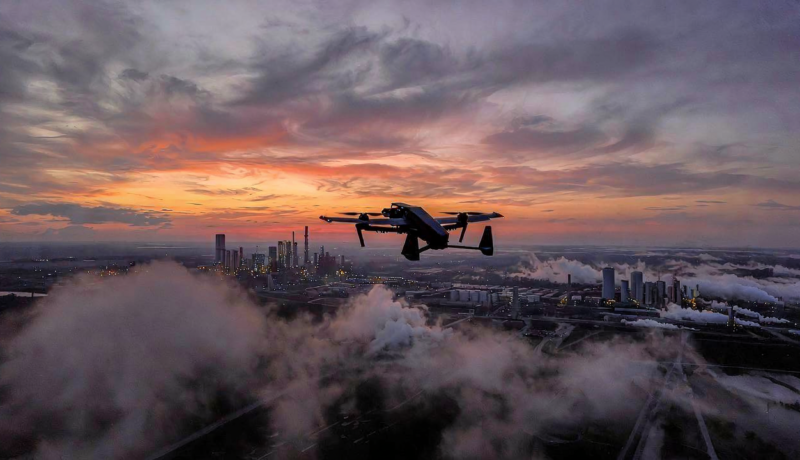
As of early 2026, Ukraine’s defense industry is capable of producing more than 8 million FPV (first-person view) drones annually, according to reporting from Just Security. These short-range systems are used along the front lines to locate, harass, and destroy Russian armor and infantry. But the more strategically significant development has been Ukraine’s long-range drone fleet.
Ukrainian long-range drones have now struck targets more than 2,000 kilometers inside Russian territory, reaching the Ural region and hitting the port of St. Petersburg. In May 2026 alone, Ukraine launched what analysts estimate as more than 7,000 long-range drone sorties into Russian territory, according to Missile Matters. Russia’s own Defense Ministry claimed its air defenses intercepted nearly 9,000 Ukrainian drones that month, a figure that, even if accurate, illustrates the extraordinary scale of the campaign.
The targets have been chosen deliberately. Ukraine has focused on oil refineries, export terminals, ammunition depots, and military airbases. During May 2026, Ukrainian forces struck more than ten key oil refining facilities across Russia, forcing complete or partial shutdowns of plants in Moscow, Ryazan, Perm, Kirishi, Tuapse, Primorsk, and Yaroslavl, according to Militarnyi. One attack on the Ryazan Oil Refinery, a key fuel supplier for Russian armored vehicles, employed air defense saturation tactics that successfully overwhelmed local Russian defenses.
The technology behind these strikes has also evolved. Reports from the Kyiv Post indicate Ukraine has fielded AI-enabled drones that are harder to jam, harder to detect, and have longer operational ranges. The Institute for the Study of War noted that “Ukraine’s defensive successes, drone adaptations, and midrange strike campaign are creating compounding effects that are degrading Russian frontline forces.”
Critically, Ukrainian drone strikes are also aimed at degrading Russia’s air defense network itself. Analysts at Tochnyi documented that between June 2025 and March 2026, Ukraine conducted confirmed strikes against 237 air defense-related targets inside Russia, including launcher units and radars. This suppression campaign creates gaps in Russia’s aerial coverage that subsequent drone swarms can then exploit, in a reinforcing cycle that is proving difficult for Moscow to break.
Deputy Defense Minister Mstislav Banik told the NATO Parliamentary Assembly in mid-2026 that Ukraine’s industry could scale to 20 million drones per year with sufficient allied investment. Ukraine is asking for $60 billion in combined support for 2026 to sustain and expand that capacity.
The Resilience of Ukrainian Society
One of the most striking observations from the Kyiv visit by Bergmann and Snegovaya was what they described as the resilience of ordinary Ukrainian life. Despite prolonged conflict, brutal winters under repeated attacks on energy infrastructure, and years of fear and loss, Ukrainian society has not broken.
This is not a trivial detail. Historically, wars of attrition are won or lost not just on the battlefield but in the social fabric behind the front lines. Russia’s strategy has been explicit: destroy infrastructure, freeze populations, and erode the will to fight. It has not worked.
Part of the explanation is ideological. Bergmann and Snegovaya found that Ukrainians across the political spectrum share a near-universal belief that this war is existential. The question is not whether to fight but how. For most Ukrainians, the alternative to resistance is not peace; it is absorption into a Russian state that has shown what occupation looks like in Bucha, Mariupol, and elsewhere. That framing removes the possibility of a comfortable middle ground and sustains morale even when the news is bad.
Another factor is adaptation. Ukrainian cities have learned to live under bombardment. Communities have built networks of shelter, mutual aid, and information sharing. The energy sector, hammered repeatedly, has rebuilt and dispersed. Local governance has become more agile. None of this is comfortable or easy, but it represents a society that has learned to absorb punishment without collapsing.
Check out my recent post on AI bubble
How Europe Is Reducing Ukraine’s Dependence on the US
Perhaps the most strategically important development of the past eighteen months has been Europe’s dramatic increase in military and financial support for Ukraine, reducing Kyiv’s dangerous dependence on an inconsistent US posture.
The shift was partly forced by circumstances. From late 2024 onward, US military assistance under the Trump administration became unreliable, with ongoing debates about the value of supporting Ukraine and, more recently, reports that the Pentagon was considering redirecting aid planned for Ukraine toward Middle East conflicts. When Russia launched an attack on Iran in early 2026, Patriot missile stocks that might have gone to Ukraine were diverted to other theaters, sharpening the crisis.
Europe’s response has been notable. European nations have significantly increased funding for unmanned systems for Ukrainian forces, allocating approximately 1.6 billion euros to this area between January and April 2026 alone, according to Ukrinform. European drone companies have also concluded joint ventures with Ukrainian manufacturers, helping to co-produce systems inside Ukraine itself.
The PURL (Partner Urgency for Ukraine Resupply Loan) mechanism has also been instrumental. This arrangement, backed by European contributions, allows Ukraine to continue receiving critical US-made weapons even when direct US transfers are uncertain. Germany transferred Patriot air defense systems to Ukraine in late 2025, with Chancellor Friedrich Merz describing the step as essential for protecting civilian lives. Ukraine’s President Zelenskyy expressed particular gratitude for Germany’s commitment.
Europe’s growing role is not merely financial. It represents a political shift: European governments are increasingly treating Ukraine’s defense as a core security interest rather than a distant charity. NATO Secretary General Mark Rutte made a secret visit to Kyiv in early 2026 to tour bombed infrastructure and emphasize the alliance’s commitment to air defense support.
Russia’s Economic and Political Challenges
The story inside Russia in mid-2026 is considerably darker than Moscow’s official communications suggest.
Russia’s GDP contracted by 0.5 percent year over year in the first quarter of 2026, according to data from the Russian central bank reported by Fortune, far below projections of 1.6 percent growth. The contraction came despite a series of interest rate cuts, and the official figure almost certainly understates the true damage. Russia’s oil and gas revenues fell by 47 percent in the first two months of 2026, partly due to Ukrainian drone strikes on export terminals and partly due to Western sanctions pressure.
Inflation is a chronic problem. Russia’s official inflation figure has hovered around 10 percent, but analysts widely believe the true rate is closer to 20 percent, based on the central bank’s own behavior: it has maintained extremely high interest rates throughout the war precisely because inflation is much worse than the Kremlin admits. High rates mean businesses struggle to service debt, and Russian corporate defaults have climbed accordingly.
The political picture is also shifting. Even Russia’s state-owned pollster has recorded a notable decline in Putin’s approval rating, from above 77 percent at the start of 2026 to 65.6 percent by May, compared to prewar levels above 80 percent. That figure, drawn from a source that has every incentive to inflate support for the Kremlin, suggests the real picture may be worse. An anonymous former senior Russian official wrote in a widely circulated Economist op-ed that fellow government officials, regional governors, and business leaders have stopped using the first-person plural when discussing Putin’s actions, a subtle but telling linguistic sign of distancing.
Russia’s Economic Development Minister, Maxim Reshetnikov, told a business conference that the economy “is not easy” and called for workforce reallocation, unusually candid language for a Kremlin official. The same Fortune report noted that one person familiar with Putin’s schedule told the Financial Times that the Russian president now spends 70 percent of his day running the war and only 30 percent on other duties, including economic management.
None of this means Russia is on the verge of collapse. It is a large country with significant resources and a demonstrated tolerance for suffering. But it does mean the costs of the war are accumulating in ways that constrain Putin’s options and erode the domestic consensus for continued conflict.
The Air Defense Problem Ukraine Still Cannot Ignore
For all the reasons for cautious optimism, experts returning from Kyiv identified one issue that overshadows all others: Ukraine’s persistent, critical shortage of air defense systems and interceptor missiles.
The problem is structural. Russia’s attacks on Ukrainian cities and energy infrastructure increasingly rely on ballistic missiles, particularly the hypersonic Oreshnik, which Russia used in a May 2026 attack on Kyiv that killed at least two people, injured more than 70, and damaged infrastructure across every district of the city. Only Patriot systems are capable of intercepting ballistic missiles. Ukraine does not have enough of them.
Zelenskyy has publicly stated that Ukraine is working to secure 10 Patriot systems from Western partners. As of mid-2025, three had been confirmed: two from Germany and one from Norway. The shortfall is acute. At the same time, Volodymyr Zelenskyy noted that more than 800 Patriot interceptor missiles were consumed in just the first three days of the Iran conflict, more than Ukraine has received throughout the entire Russian invasion. The implication is that global stocks of the missiles are extremely tight, and Ukraine must compete with other crises for access to them.
The Pentagon’s reported consideration of redirecting Patriot stocks from Ukraine to the Middle East has sharpened this anxiety in Kyiv. Ukrainian Air Force spokesperson Yurii Ihnat has said that as Russia increasingly targets energy infrastructure with ballistic missiles, only Patriot systems can provide meaningful protection.
Zelenskyy is expected to make air defense the centerpiece of Ukraine’s position at upcoming G7 discussions. His message: Ukraine does not simply need more weapons in general; it needs specific systems capable of intercepting the specific threats Russia is now deploying at scale.
Why Peace Negotiations Remain Difficult
Despite the changing battlefield picture, both Bergmann and Snegovaya were sober about the prospects for meaningful negotiations.
The fundamental problem is that neither side currently has sufficient incentive to compromise significantly. Ukraine’s improving position may paradoxically make it less willing to accept terms that would have seemed reasonable a year ago. Kyiv’s calculation is that time and sustained pressure may yet shift the balance further in its favor, particularly if Russian economic strains intensify and European support continues to grow.
Russia’s position is equally rigid, though for different reasons. Putin’s domestic narrative has committed him to a maximalist outcome in Ukraine. Any settlement that could be characterized as a failure would create political risks he has spent years trying to eliminate. Despite the declining approval ratings and growing elite unease, there is no visible mechanism for political change in Moscow that could produce a leader willing to accept an unfavorable peace.
International mediation efforts have also struggled to find traction. Talks in Geneva in early 2026, brokered in part by US envoys, ended without agreement. German Foreign Minister Lars Kaskell described the broader negotiating environment as “deadlocked,” while Chinese counterparts offered more optimistic assessments, a divergence that itself reflects the absence of a unified diplomatic strategy.
The structural problem is that a negotiated settlement requires both sides to believe that the alternative (continued war) is worse than the compromise on offer. As of mid-2026, that calculation does not yet hold for either party.
What Could Happen Next
Several scenarios are plausible over the coming months, and honest analysis requires acknowledging uncertainty rather than false precision.
The optimistic scenario for Ukraine sees continued drone pressure on Russian infrastructure gradually eroding Moscow’s economic capacity and domestic support, while European military commitments deepen and Patriot deliveries improve. In this trajectory, Russia’s ability to sustain large-scale offensive operations begins to degrade, forcing a more defensive posture that in turn reduces Ukrainian territorial losses. Negotiations become more possible as Moscow’s costs become more apparent.
The pessimistic scenario involves Russia successfully adapting its air defense against Ukrainian drones, perhaps through electronic warfare improvements or Chinese technical assistance. It also involves continued US inconsistency on military aid, particularly if competition with Middle East commitments leaves Ukraine short of interceptors. In this trajectory, Russia retains the capacity to punish Ukrainian cities through winter and sustain enough battlefield pressure to grind forward in the east.
The most likely near-term picture is probably something in between: a war that remains brutally contested, where neither side can deliver a decisive blow, but where Ukraine’s drone campaign continues to impose meaningful costs on Russia and European support continues to deepen.
What is clear from the expert analysis of the Kyiv visit is that the war is not going the way Russia planned. It is also not going the way Western pessimists feared. Ukraine is not collapsing. Its military is innovating. Its society is holding. And the country that launched this war is paying a heavier price than it expected.
Key Takeaways
- Ukraine’s drone industry has become a genuine strategic asset, capable of striking more than 2,000 kilometers inside Russian territory and damaging critical oil and military infrastructure at scale.
- Europe’s military and financial support has grown substantially, reducing Ukraine’s dependence on inconsistent US assistance, though the US remains important, especially for Patriot systems.
- Russia’s economy is under real strain, with GDP contraction, persistent inflation, and a 47 percent drop in oil export revenue in early 2026, partly caused by Ukrainian drone strikes on export terminals.
- Putin’s domestic approval rating has fallen to its lowest level since before the war, according to Russia’s own state pollster.
- Ukraine’s most critical vulnerability remains its shortage of Patriot air defense systems and interceptor missiles, which are the only effective defense against Russia’s ballistic missile attacks.
- Peace negotiations remain deadlocked because neither side currently has sufficient incentive to accept terms the other could offer.
- Ukrainian society has shown extraordinary resilience, sustained by a near-universal belief that the war is existential.
Conclusion
The Ukraine war latest news in mid-2026 offers a more complex picture than either simple optimism or despair would suggest. Ukraine is fighting smarter, hitting harder, and sustaining itself more independently than many observers thought possible eighteen months ago. Russia is paying genuine costs: economic, military, and political.
But wars are won by margins, and some of those margins remain dangerously thin. The shortage of air defense capabilities is not a minor logistical inconvenience; it is an existential vulnerability that Russia is actively exploiting. Zelenskyy’s focus on Patriot systems at every international forum is not theater. It reflects a clear-eyed assessment of where Ukraine is most exposed.
What Bergmann and Snegovaya brought back from Kyiv was not triumphalism. It was something more durable: the picture of a country that has decided, collectively, that it will not be beaten. Whether the rest of the world provides it with the tools it needs to make that decision stick is a political question, not a military one, and the answer will matter long after this war ends.
FAQ SECTION
Q1: What is the current state of the Ukraine war in mid-2026?
As of mid-2026, the Ukraine conflict update shows a war that is more competitive than many outside observers expected. Ukraine has not been defeated and has developed significant drone strike capabilities that are imposing real costs on Russia’s energy infrastructure and military logistics. However, Russian forces continue to hold occupied Ukrainian territory, and the front lines have not changed dramatically. The conflict is best described as a contested attritional war in which Ukraine is performing better than anticipated but has not achieved a decisive breakthrough.
Q2: How has Ukraine’s drone warfare changed the conflict?
Ukraine drone warfare has become one of the defining features of the war. As of early 2026, Ukraine is producing more than 8 million FPV drones annually and has deployed long-range drones capable of striking targets more than 2,000 kilometers inside Russia. These systems have targeted oil refineries, export terminals, ammunition depots, and air defense infrastructure. The campaign has forced Russia to divert significant resources to aerial defense, disrupted its fuel supply chain, and demonstrated that Russia’s vast territory no longer provides a secure rear area.
Q3: Why is Ukraine’s air defense situation still so serious?
Ukraine air defense systems, particularly Patriot batteries and their interceptor missiles, remain in critically short supply. Russia has shifted its attack strategy toward ballistic missiles, including the hypersonic Oreshnik, which only Patriot systems can intercept. The global supply of Patriot interceptors is extremely limited, and competition from other conflicts, particularly in the Middle East, has made securing additional stocks very difficult. Zelenskyy has requested 10 Patriot systems from Western partners; as of mid-2025, only three had been confirmed.
Q4: What is happening to Russia’s economy because of the war?
Russia’s economy contracted by 0.5 percent in the first quarter of 2026, well below projections. Oil and gas revenues dropped 47 percent in the first two months of 2026, driven by Ukrainian drone strikes on export terminals and Western sanctions. Inflation remains significantly higher than official figures suggest, with some analysts estimating the real rate at nearly 20 percent. Corporate debt defaults have increased, and even Russia’s state pollster has recorded Putin’s approval rating falling from above 80 percent before the war to 65.6 percent by May 2026. Russian elites are described as “increasingly alarmed” by the trajectory.
Q5: What is the Zelenskyy G7 summit strategy on air defense?
At upcoming G7 discussions, Zelenskyy is expected to make air defense the central focus of Ukraine’s requests. He has publicly called for 10 Patriot air defense systems and the interceptor missile packages to equip them, as well as $65 billion in annual defense support including $25 billion for drone production. His argument is that air defense is not merely a military need but a precondition for Ukraine’s survival and European security more broadly. He has noted that the volume of Patriot interceptors consumed in just three days of fighting in the Iran conflict exceeded Ukraine’s entire intake across the full Russian invasion.
Q6: Why is a peace deal so difficult to achieve?
Neither side currently has enough incentive to accept terms the other could credibly offer. Ukraine’s improving military position and widespread societal belief that the war is existential make Kyiv reluctant to accept terms that involve territorial concessions. Russia’s domestic political narrative, which has promised a maximalist outcome, means that any deal Putin could sign would likely be portrayed domestically as defeat. International mediation through Geneva and other forums has so far failed to produce agreement, and diplomatic efforts remain fragmented across the US, Europe, and China.
Q7: How is Europe compensating for US inconsistency on aid to Ukraine?
European countries have significantly increased both financial and military support for Ukraine. Between January and April 2026 alone, European nations allocated approximately 1.6 billion euros specifically for drone systems. European drone companies have entered joint production agreements with Ukrainian manufacturers, co-producing weapons inside Ukraine itself. The PURL mechanism allows Ukraine to continue accessing US-made systems even when direct US transfers are uncertain. Germany has provided Patriot systems and continues to be a significant bilateral contributor. NATO, under Secretary General Mark Rutte, has stepped up its direct engagement with Kyiv.





No Comment! Be the first one.